Participated on this panel at the Bloomberg / Dell conference at the fantastic Bloomberg offices in NYC.
In addition to the panel I was on, I really enjoyed the Michael Bloomberg / Michael Dell interview at the end of the event.
Wednesday, February 03, 2016


Friday, June 19, 2015
Role of the CIO in 2015
Very interesting article by Dion Hinchliff on how the CIO role is changing in today's highly networked organization. He has included some of my comments in his post.
The way work is conducted, especially in knowledge work environments, has changed. The technologies we use and the way we use them is very different from just 5 years ago. CIOs need to change how we select, deploy and support new technologies. Fortunately, many of the newer technologies are cloud-based and, generally, much easier to use.
The way work is conducted, especially in knowledge work environments, has changed. The technologies we use and the way we use them is very different from just 5 years ago. CIOs need to change how we select, deploy and support new technologies. Fortunately, many of the newer technologies are cloud-based and, generally, much easier to use.
Wednesday, June 10, 2015
Watch as the Hub of your personal digital life
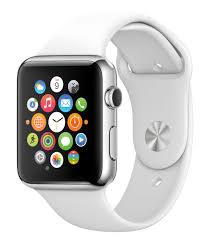 I just read this article on VentureBeat that makes a lot of sense. Given the fact that Apple Watch already has the ability to connect to an iPhone using WiFi and Bluetooth, as the Watch OS continues to evolve and new apps become available, it is possible that for a lot of functions, the Watch will become the primary personal digital device (especially, inside a building or home on a WiFi network). I can already see my wife pairing her bluetooth speaker to stream Spotify with a Watch instead of her phone (The only barrier to this happening is the fact she hates wearing a Watch!).
The Watch needs a cellular data connection to truly replace a Phone. I am certain that in a couple of years (if not sooner) watches will have cellular connectivity.
I am very excited to see how wearable devices evolve over the next few years.
Thursday, May 07, 2015
Managing IT for a Diversified Portfolio of Businesses
Interview by Peter High on how we have created a successful shared technology services in a diversified and decentralized business.
Friday, May 01, 2015
Drone Graffiti (Droffitti?)
A lot of people are having a lot of fun with Drones. Cool article in Wired. Cool Video of KATSU's Drone Paintings:
Hosting a very timely CTO Summit on Drones on June 11th. We are also organizing a Drone Petting Station :-)
 Pic Credit: Preeti Gujral
Hosting a very timely CTO Summit on Drones on June 11th. We are also organizing a Drone Petting Station :-)
Saturday, April 04, 2015
Cloud-first strategy
Nice interview on my cloud-first strategy on IBM THINK Exchange: https://www.think-exchange.com/pacesetters/yuvi-kochar…. Also like the graphic-effects on my picture!
Tuesday, November 18, 2014
Agorithms can now understand photos
 My first introduction to AI was when I learned LISP programming in 1985. Everyone believed that computers were soon going to be be as smart or even smarter than humans in many domains. Instead of a revolution, AI turned out to be a slow process of evolution and refinement. Articles like this one I read today: "Google Stanford build hybrid neural networks that cane explain photos", point to how technology continues to mature in this space. The pace has picked up. We are all benefitting from smarter and smarter services that we have come to expect and embrace without thinking about the complex, powerful and extremely fast algorithms that make it all possible.
Pic: Sunset view of DC from my office
Tuesday, February 11, 2014
Interopertating Things
Internet Of Things
Over the past year, I resisted carrying additional connected devices besides my iPhone. However, recently I succumbed and tried a couple of new devices connected to my iPhone over the past several weeks and have been impressed how easy some of these devices are to connect and use. It is obvious that everyone will soon be carrying several specific-use accessories connected to the smartphone. Many of these will be barely useful but others will truly deliver value.
Pebble

Typo

I tried the keyboard with my blackberry all weekend long. It was very easy to connect and worked quite will. While, personally, I am comfortable with the standard glass keyboard on the iPhone, I plan to get a few of my colleagues who really want a physical keyboard to try it out.
Wednesday, July 17, 2013
Indians get a Unique Identity

During my recent vacation in India, I had a wonderful opportunity to meet one-on-one with Nandan Nilekani, the Chairman of Unique Identification Authority of India (UIAD). Nandan is one of the architects of Offshore IT business in India. He founded and evolved Infosys into one of the most innovative and successful IT services provider in the world. I have always admired what he and his team achieved at Infosys.
I had heard about Nandan leaving Infosys in 2009 to lead a government project to provide a Unique Identification number (called Aadhaar number) to each and every Indian. I was intrigued but just did not get around to learning more about the initiative. Aadhaar is the hindi word that for "foundation" or "support". The idea is to create a 21st century equivalent of the US Social Security Number in India. The most attributes of the program in India are:
- Each Aadhaar number is associated with biometric information (retina and fingerprint scans) that uniquely and digitally identifies the person.
- UIAD had developed and runs a simple high-performance web-service for on-line verification of the Aadhaar number and the biometric information associated with it.
Over 12 years ago, I realized that strong identity management is central to secure and seamless access to IT services. We have developed a robust Identity and Access Management for the 30,000+ employees at the Washington Post companies and integrated all our services to one central IAM solution. It was very hard for us to develop a solution that is now broadly utilized across all the IT services provided by my team. The complexity of deploying a solution to support 1.2 billion people is just mind-blowing. The logistical and political challenges are just enormous.
I believe that even if the project delivers only 10% of its true potential, the value to the country and the citizens of India will be huge.
Tuesday, March 12, 2013
Leap Motion

Wow! How we will be interacting with computers in the 3D space in the very near future - pre-order for $80 on BestBuy.
Subscribe to:
Posts (Atom)
 subscribe to this blog