Showing posts with label electronics. Show all posts

Wednesday, June 10, 2015

Watch as the Hub of your personal digital life


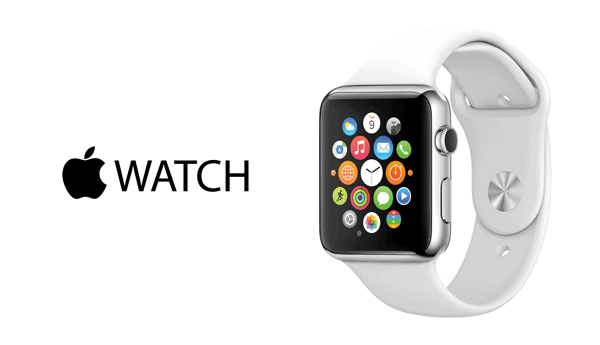
I just read this article on VentureBeat that makes a lot of sense. Given the fact that Apple Watch already has the ability to connect to an iPhone using WiFi and Bluetooth, as the Watch OS continues to evolve and new apps become available, it is possible that for a lot of functions, the Watch will become the primary personal digital device (especially, inside a building or home on a WiFi network). I can already see my wife pairing her bluetooth speaker to stream Spotify with a Watch instead of her phone (The only barrier to this happening is the fact she hates wearing a Watch!).

The Watch needs a cellular data connection to truly replace a Phone. I am certain that in a couple of years (if not sooner) watches will have cellular connectivity.

I am very excited to see how wearable devices evolve over the next few years.

Tuesday, March 12, 2013

Leap Motion


Wow! How we will be interacting with computers in the 3D space in the very near future - pre-order for $80 on BestBuy.


Saturday, January 08, 2011

CES 2011
I enjoyed the show much more than last year. My top-5 list:
  1. Video over the top is gaining momentum. It is integrated with TVs, DVD players, game controllers, and on stand-alone devices (roku, apple TV, boxee, logitech revue, etc.).
  2. Smart TVs The world has finally moved beyond TVs with web-browser access. TV manufacturers are embracing the app store model with apps for Netflix, Skype, Facebook, Twitter, Yahoo TV, Comcast Xfinity, Interactive white board, etc. Samsung made the biggest splash and seems to be leading in Smart TVs. They are offering access to content on Samsung TVs, PCs, Tablets and Smartphones. It seems to be a closed solution like the one from apple. They did bring a lot of partners on the stage (Time Warner, Comcast, Hulu, etc.).
  3. Microsoft Xbox 360 and Kinect are now central to Microsoft strategy and product suite. Gesture and voice control on these devices works very well. Microsoft sold 8M Kinect units in 60 days. Windows 7 phone is also being hitched to the Xbox. I believe that Kinect presents as huge step forward in human / technology interface. Microsoft is the only one with a commercial product using the human body as a controller. This is one area where they have a significant lead in the market place.
  4. 4G LTE from Verizon presents a huge opportunity for new products leveraging real mobile broadband access. Tablet experience with video and animation may finally be good on a cellular connection. Google, Verizon and Motorola are partnering to challenge Apple. Consumer excitement about 4G LTE was demonstrated by a huge crowd at the Verizon booth. The quality of video conferencing on 4G was also quite impressive.
  5. Android continues to enjoy fast evolution and broad adoption

Other interesting technologies and News:

  1. Several products with glasses free 3D HD phones and TVs (Toshiba, Samsung, LG, Intel, etc) were on display. The technology is still not ready for prime time but it is very promising and might be what is required for 3D HD to take off.
  2. Microsoft unveiled a new version of the Surface computer. It was 4 inches thick and looked cool. They claim that the camera has now been embedded in the display. I will like to learn more about how the technology they are using.
  3. Android tablets were every where but not very impressive. There was an interesting Motorola announcement of an tablet based on Android v3 (honeycomb). There were several inexpensive tablets from Korea and China.
  4. The blackberry PlayBook tablet was actually quite good. However, I am not sure if they can attract the developer community to build on the platform. iOS and Andriod have their full attention.
  5. No tablet from Microsoft
  6. Google chrome OS seemed lame
  7. I did not see any new e-book readers. The functionality seem to be migrating to the tablets. Google demonstrated a nice eBook app on Android 3.
  8. Saw some very impressive tiny LED projectors. I believe that projectors will some day converge with smartphones and tablets presenting an easy way to show and share media with others on small devices
  9. Smartphones as payment devices might finally arrive in the US in 2011 ... haven't we heard that before!
  10. Large scale 3D displays from Sony and Samsung were very cool. I was amazed by the quality of 3D on large wall displays
  11. Nokia and Sony are in trouble. HTC also seems to be losing out to Samsung and Motorola
  12. Many smart appliances were on display: LG, Samsung, Haier. I am not sure if consumers will really use web-connected ovens?
  13. No major Chinese manufacturer on the scene yet (Haier?)
Overall, the trip was worthwhile and fun!

Pic: Samsung TVs merge with a Seurat painting ... very attractive!

Monday, January 05, 2009

eBooks
A good roundup of current and upcoming technologies in this NY times article. I think reading books on an iPhone is a stretch.

Thursday, May 01, 2008

Bio-materials in Electronics
Cool article in BusinessWeek on the potential use of biomatrials in electronic devices. It is about time that we start seeing some malleability in the rigid "blocky" forms of our computing devices. Should allow for some interesting innovation in User Experience. Am not sure if any these concepts will see the light of day in anytime soon.

Pic: A Nokia Eco Sensor concept phone that senses your environment. The design does look cool but not that malleable.

Wednesday, February 20, 2008

Use doubleTwist to free your media
Came across an article describing doubleTwist. It is a Windows desktop that allows you to move your media between devices and share it with friends. I will surely be trying this!

The most interesting part is that this is developed by a
Norwegian programmer Jon Lech Johansen (DVD Jon), who at the age of 15 in 1999, helped crack the encryption codes that prevent the viewing of DVDs on computers. He was charged but eventually acquitted.

C-Net article

Friday, January 25, 2008


Innovation @ Nokia
I am amazed at how Nokia continues to be the largest and wildly profitable handset maker in the world, while Motorola, their main competitor, stumbled terribly. Here is a great example of why:

Nokia has announced a couple of new low end phones (1209 and 2600) for emerging (high growth) markets deliver what the customer wants: phone sharing (address book for 5 users with cost tracking), because users share phones; low cost: $50 and $90; FM radio, VGA cam. More details on MobileMentalism.

It is impressive that a company with 130,000 employees continues to launch innovative handsets that very effectively address the needs of each of their customers.

Tuesday, January 22, 2008

Folding Phone
A phone from Polymer Vision, a Philips spin off, with a five inch foldable screen will be out in mid-2008. Cool! Go to their website to take a look in 3D! Story on Reuters.


Monday, January 14, 2008


Everex Cloudbook - Another Linux Ultra-Mobile PC (UPMC)
Just read about another Linux-based internet browsing device Think Cloudbook from Everex - similar to the Asus EEE I saw at CES.

Not much in common between the two devices besides the 7" VGA LCD Screen and the price ($399). Cloudbook has a 30 GB Hard Disk whereas the Asus has 4 GB solid-state storage. Here is a nice article comparing the two on LinuxDevices.com.

Retro Is In - NComputing (Terminals circa 2008!)

NComputing makes hardware and software for virtual desktop computing. They just raised $28 million in its Series B round led by Menlo Ventures raising their valuation to over $100 million.

Contrary to its competition, NComputing sells its products to educational institutions in the U.S. and abroad, and in emerging markets.

NComputing devices allow up to 30 users to run OS and other applications from a single computer (reminds me of mainframes in the 70s). The device costs between $70 and $200 per user. Over the last 18 months the company has deployed over 500,000 units, including a 180,000-unit deployment in schools throughout Macedonia. The product has also been deployed in schools in Bangladesh, Turkey, Lewisville, Texas, and 19 different school districts in North Carolina. Microsoft products seem to be the biggest cost of their service. Microsoft sells their products at a much lower rate in these markets, thus reducing the cost of the NComputing product.

I believe that these are the kinds of products where Linux-based desktop solutions make a lot of sense.

Sunday, January 13, 2008

Coolest gadgets / technology @ CES 2008 (my list)

Saturday, January 12, 2008

PCs @ CES - now a commodity
Nothing very exciting as far as PCs are concerned. HP is allowing users to personalize laptops with art. You can now choose from a wide range of skins. The laptops are still clunky and heavy. Vista underwhelms. Apple clearly is way ahead of most PC makers when it comes to software design and user interface.

Toshiba was displaying a whole slew of new innovations: face-recognition software, hand gesture interface, solid state PCs, etc.

There were several Ultra-light PCs on display. Most of them now come integrated with evdo or hsdpa. Nothing new and exciting features over the past couple of years.

Friday, January 11, 2008

Brian Roberts@CES on Comcast 3.0
The first part of the presentation was very boring as Brian cycled through a traditional PowerPoint deck. He explained that at last year's CES, the cable companies realized that their world was changing:
  • HDTV prices were going down
  • Cable networks were advanced but operated as silos
  • Cable boxes are closed
What he did not say was that Verizon FiOS was a bigger threat than they had imagined. So, cable operators have decided to respond. Here are a few things they plan to do in 2008:
  • Give consumer more choice as choice sells
  • Improve customer service (at least he accepted their terrible record on this front). Time will tell if they can execute on this promise.
  • Innovate by working with CE companies
He announced a couple of projects:
  • Tru2Way - Comcast name for the “OpenCable Applications Platform” (OCAP), a cable box standard that he claimed to be OPEN. Let us see if what we define as open is what the cable industry defines as open. Panasonic announced the integration of Tru2Way within their televisions i.e. the set to box is in the TV. Engadget article on how we got to tru2way.
  • DOCSIS 3.0 Cable Modem Standard developed by CableLabs (Industry ): provides a number of enhancements, most notably, channel bonding, support for IPv6, and support for IPTV. Channel bonding provides cable operators with a flexible way to significantly increase downstream speeds to a minimum of 160 Mbps, and upstream throughput up to a minimum rate of 120 Mbps to customers.
  • Project Infinity - Comcast effort to deliver a large volume of movie and TV content on-demand
  • Fancast: A website where customers can access on-demand content via PC. The site also has some social networking features and recommendation engines
The best part of the presentation came at the end when he invited Ryan Seacrest to be with him on stage to launch Fancast and finally a very entertaining session by the flight of the conchords.

Comcast / Flight of the Conchords at CES 2008

________________________________________________

This is what made it worth sitting through the presentation!

Thursday, January 10, 2008


Cool@CES: 3M Mobile Projector
One of the coolest things I saw at CES was a miniature 3M projector that can be integrated with mobile devices. It had VGA display capability and 3M is currently working on finding partners to integrate it into mobile devices. I have been waiting for this (post from a year ago) feature as I believe it will allow us to do much more computing with mobile devices.

I have also seen news of Korean company SK Telecom's launch of a projection cell phone with technology from Iljin. The product "Nano Projector" (pic left) was launched in July 07. It can project a 20-inch image and was expected to be in mass production late last year.

I believe that this has the potential of making mobile devices more social. I can imagine that, in a couple of years, people will be showing pictures and videos to friends by projecting them directly from their mobile device.
BIG@CES for TVs
Wireless TVs
Big players (panasonic, sanyo, sony, belkin, etc.) were demonstrating wireless HD TVs. This implies that you do not need to place you TV next to the cable drop in the room. I think 2009 is when this will be everywhere.

Size
Contrary to last year, when everyone was touting their biggest TVs, this year only Panasonic had moved in this area and had the biggest Plasma TV (150 in) on display. WOW! It seems that the 103 in they displayed last year sold for $70,000. I wonder how much this one will cost. There was a lot of focus on reducing the thickness of flat screen TVs. Panasonic, Samsung and Pioneer has very impressive "thin" sets on display.

Picture enhancement
All manufacturers are developing circuitry and routines to enhance to the viewing experience: cleaner movement, better contrast, etc. Some of these obvious and others not.

HD Everywhere
- Very small HD camcorders
- HD PC Displays
- HD Projectors

OLED TVs (shown in pic)
This is the next generation technology for television and displays. Sony and Samsung had OLED TVs on display. These are less than and inch thick and are dazzling displays. You have to see one to believe how good they are. I had written about this (link) several months ago when the first Sony OLED TV was released.
BIG@CES Linux on PCs
I saw several linux based laptops at CES. 2008 is clearly the year when significant money will be spent on linux-based internet devices. The most interesting ones are flash based and very portable. The number of apps available for these devices is exploding. The two that top the list are:
  • ASUS EEE: starting at $299, laptop format, full keyboard, fast, great finish, usb port, comes with openoffice, XP compatible, etc. (link to full specs). The device is best for young kids and low usage (web surfing and e-mail) adults.
  • Nokia 810: third version of the product, coat pocket size, touch screen, slide-out full keyboard (small), $480, camera (for video conferencing), etc.
With the poor reviews of Microsoft Vista, these machines have a real opportunity to get a piece of the low end of the marketplace.

Tuesday, January 08, 2008

Paul Otellini, CEO Intel @ CES

I was not planning to go for this keynote as I wanted to spend more time on the show floor. However, I just wanted to sit down as my feet were killing me after having walked for 6 hours. I was pleased that I did go for the keynote. Bill Gates looked tired and

Paul started with a video with new words and images for the 80s song: "Video killed the radio star" ... that went "Internet killed ... CDs, Video, etc, etc".
The key messages from his speech was that the "Go to" internet will become an "internet comes to us" and far beyond push media, rss, etc to an environment that really understands context, needs and preferences. Everyone agrees on this (Bill did too!) and there is a lot of innovation in that direction.

He went on to demo a Mobile device that translates road signs from Chinese to English and even acts as an interpreter, reads restaurant signs and streams restaurant ads. Very cool! Paul described it as a Total Immersion Technology that understands our needs based on context. We get what we need when we need it and how best we can consume it.

He then demoed Everyscape, real views of a location. I think there are several projects underway in this space to take maps to the next level with real images for a true experience of a location before we get there.

Key Obstacles
- processing power (after all, it was an Intel presentation)
- pervasive access to broadband
- natural User Interfaces
- security and privacy

1. Processing Power
Intel (and others) have continued to make chips smaller and more efficient ... Moore's law lives on (twice the transistors on a chip in 2 years). More and more functionality (audio, video, wireless internet) is being delivered in SOC (System On Chip) packaging. Smaller and smaller chips put more and more functionality in mobile devices.

2. Wireless broadband everywhere
Wimax, 3g, 4g, etc. promise to deliver higher and higher bandwidth to mobile devices.

3. User Interface
Bill also pointed out that we are now moving beyond keyboard, muse and joysticks to wands, gestures, etc.

Paul and others then brought on the coolest demo of the presentation. It described in detail in this Wired article and in this AllthingsD blog post. The companies that participated:
- eJamming: Paul thinks that social networking does not offer social interaction. This will change in the next few years.

E-jamming: Allows band members at remote locations to play together. WOW! Very Impressive! They plan to launch technology to "Jamcast" live performances by bands at dispersed locations on the internet.

Big stage: Allows you to easily create a life-like avatar from 3 photos and instantly integrate it (yourself) into movie / TV scenes, music videos, virtual worlds, still images, emails, social networks, etc.

Organic motion: motion-capture system that requires no specialized suits, just an array of cameras.

Smash Mouth then performed the first-ever virtual song: Steve Harwell (lead singer) performed in the Organic Motion booth and the band live over the Internet. Everyone was on the screen as avatars. Very cool. Intel surpassed Microsoft in a software demo!
Monday, November 26, 2007

One week with Kindle
I have had the device for a week now and I do like a lot of things about it. Overall, the Kindle is best suited for someone who travels a lot or for someone buying a lot of books that are not worthy of displaying on a bookshelf.

The BIG negative: The physical design is terrible making the device very unpleasant to use. Here is a very detailed description of what is wrong with the device from a design perspective.

I really hope that Amazon can find someone with experience to design v2.

Friday, November 23, 2007

Kindle Experiences
I feel that the device is well thought out and the user experience is very good. The main issue I have is that I constantly keep pressing the buttons on the two sides of the device. I feel that the buttons should be a bit smaller.

Transferring documents to Kindle
Emailed a Microsoft Word document and a jpeg file to the Kindle. They both showed up in about 5 minutes. The tables in the word documents were converted to text. Overall, I am quite satisfied with the function. It did accept a pdf even though the documentation does not list that as a supported format.
I am not very happy with the $0.10 I have to pay for receiving each of the documents.

Wednesday, November 21, 2007


amazon kindle
Got my Kindle today and spent a couple of hours with it. It seems that the complete stock sold out in 5 1/2 hours (engadget post).

Overall, I am impressed and feel that it does have a shot at becoming the iPod for books.

What I love:
  • EVDO access: Seamless download of subscriptions I bought
  • Readability is great

What I hate:

  • Inability to load content from a source other than Amazon
  • Speed
  • Cost (especially for blogs)
ebook Reader tech specification Comparison on Wired